
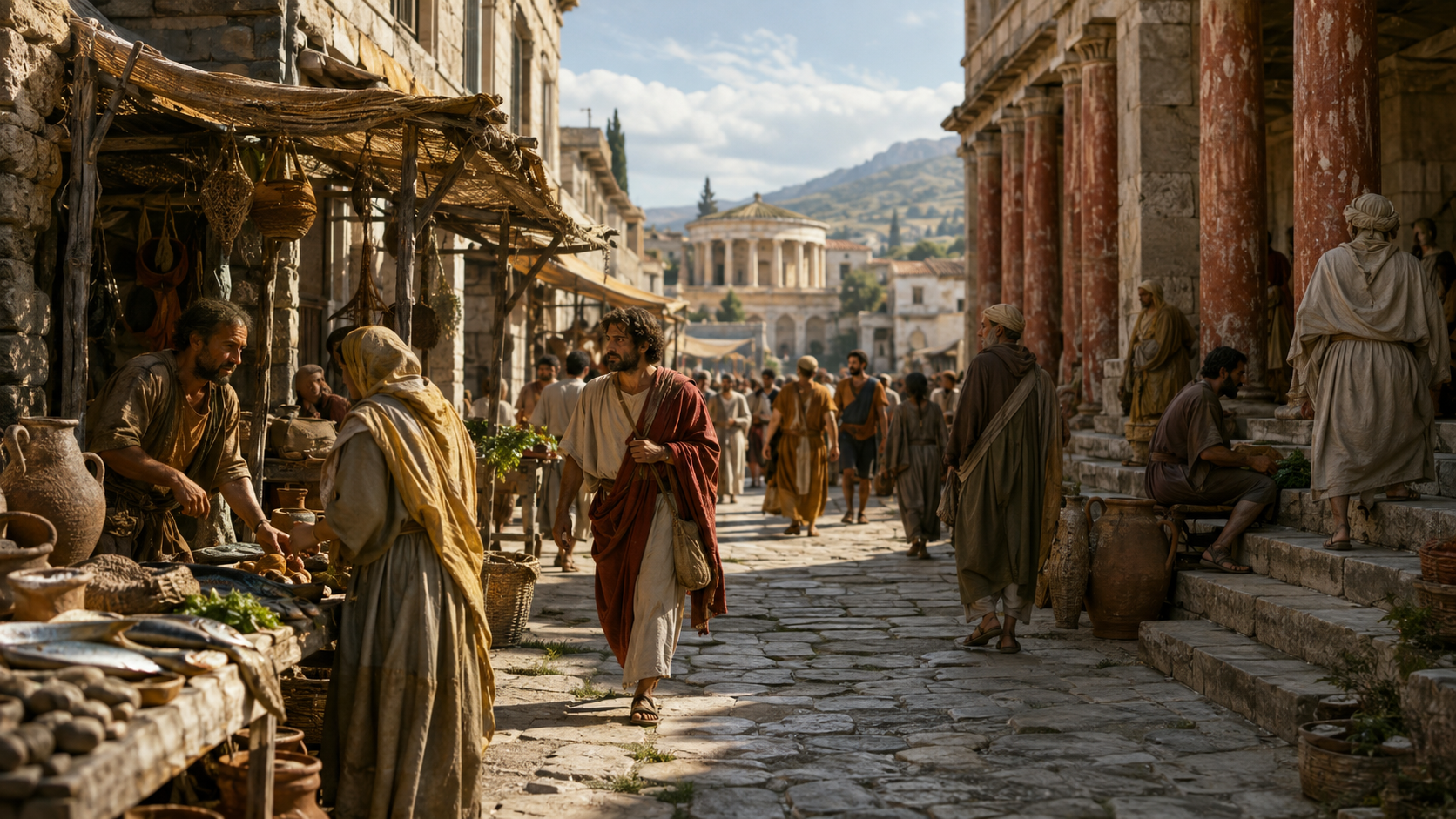
Ancient Mediterranean trade is often described through famous ports and luxury cargo, yet its deepest influence appeared in ordinary homes. Ships and caravans moved grain, oil, wine, ceramics, metal, cloth, spices, and ideas between coasts. The routes connected distant communities and quietly changed what people ate, wore, built, and believed.
Markets depended on networks of farmers, sailors, dockworkers, merchants, money changers, and craftspeople. A jar produced in one region might carry oil to another city, be reused for storage, and finally become construction material. Archaeologists trace these movements through stamped handles, shipwreck cargoes, coins, inscriptions, and chemical analysis of residues.
Food offers some of the clearest evidence. Imported grain could sustain a crowded city when local harvests failed. Fish sauce, dried fruit, wine, and olive oil traveled in standardized containers. New ingredients entered local cooking slowly, while familiar products acquired regional styles. Access differed by wealth, but trade influenced even modest kitchens.
Trade also shaped employment and migration. Seasonal crews followed shipping schedules, interpreters worked at busy docks, and merchant families formed communities abroad. Religious practices and artistic motifs traveled with them. A household object could copy a foreign design without its owner ever crossing the sea, making cultural exchange part of daily experience.
Ports developed practical systems to manage movement. Warehouses, scales, contracts, road stations, lighthouses, and harbor regulations reduced risk. Letters and account tablets show merchants coordinating credit and delivery across long distances. Information was as valuable as cargo because news of weather, war, taxes, or shortages could change a voyage.
The system was powerful but fragile. Piracy, storms, conflict, disease, and political collapse interrupted supply. Communities responded by storing grain, diversifying routes, and maintaining local production. Archaeological layers showing sudden changes in imported pottery often reveal disruption before written sources mention it.
Studying trade routes helps historians move beyond a map of arrows. The networks were lived through prices, meals, jobs, fashions, and personal relationships. They created opportunity and inequality at the same time. Their legacy demonstrates that globalization is not only a modern phenomenon, even though ancient exchange moved at the pace of wind and muscle.
For institutions interested in Mediterranean history, the most useful first step is a small, carefully evaluated pilot. Clear goals, feedback from participants, and transparent results make it easier to improve the work before expanding it. That measured approach also helps communities direct limited time and funding toward methods that produce lasting public value.