
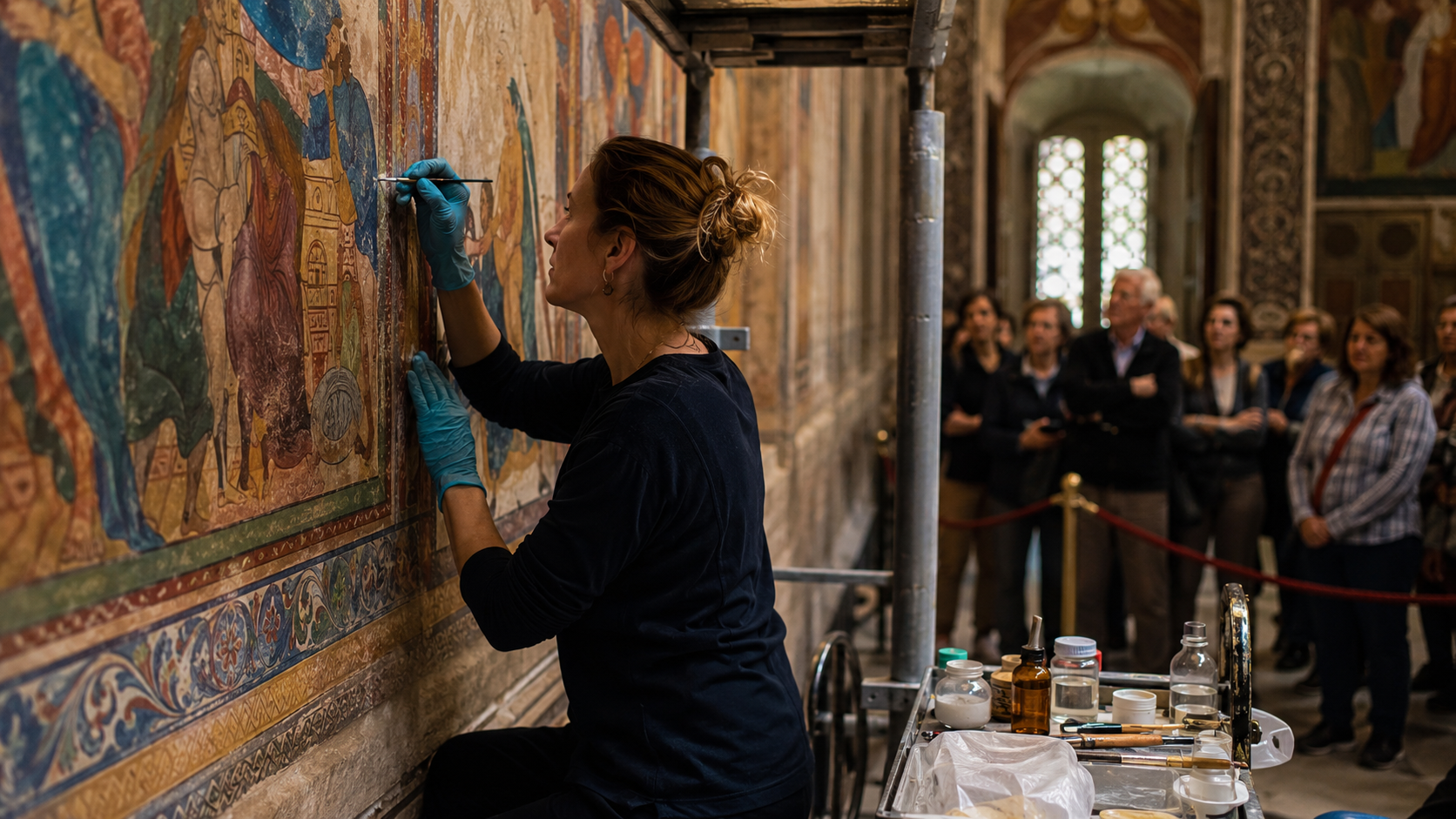
Public art faces conditions that museum objects rarely encounter. Murals, mosaics, monuments, and outdoor sculptures endure sunlight, rain, pollution, temperature changes, touching, and accidental damage. Conservators work to slow deterioration while respecting the artist’s materials, the community’s attachment, and the reality that the work must remain visible in a shared space.
Protection begins with close observation. Teams photograph surfaces, map cracks and color loss, review maintenance records, and test small areas. They identify whether damage comes from water, unstable walls, metal corrosion, biological growth, or earlier repairs. Understanding the cause matters because cleaning alone can make a temporary improvement while the real problem continues.
Treatment is usually restrained. Conservators may remove harmful deposits, stabilize loose paint, fill vulnerable joints, or apply a compatible protective coating. Every material is tested for color change and future removal. For murals, scaffolding allows specialists to work centimeter by centimeter, often beside the public that uses the street every day.
Community knowledge can be as important as laboratory analysis. Residents remember when a work changed, which images carry special meaning, and how the site is used. Artists or their estates may provide original sketches and approved colors. Consultation helps teams distinguish damage from intentional texture and prevents technical decisions from erasing social history.
Modern documentation supports long-term care. High-resolution photography, ultraviolet imaging, moisture meters, and three-dimensional scans create precise records. Environmental sensors reveal patterns that a single inspection might miss. Digital models also help plan drainage or structural repairs before anyone touches the artwork, reducing the risk of unnecessary intervention.
Conservators face difficult choices when a work was designed to be temporary or has been repeatedly altered. Repainting can restore visual impact but cover original material. Moving an object may protect it physically while weakening its connection to place. Ethical teams document alternatives, explain uncertainty, and make decisions with owners, artists, and affected communities.
Conservation cannot freeze public art in time. Weathering and changing surroundings are part of its history. The goal is to manage change so that important material and meaning are not lost without thought. Regular inspections and modest maintenance are usually more effective than an expensive rescue after years of neglect.
For institutions interested in public art conservation, the most useful first step is a small, carefully evaluated pilot. Clear goals, feedback from participants, and transparent results make it easier to improve the work before expanding it. That measured approach also helps communities direct limited time and funding toward methods that produce lasting public value.