
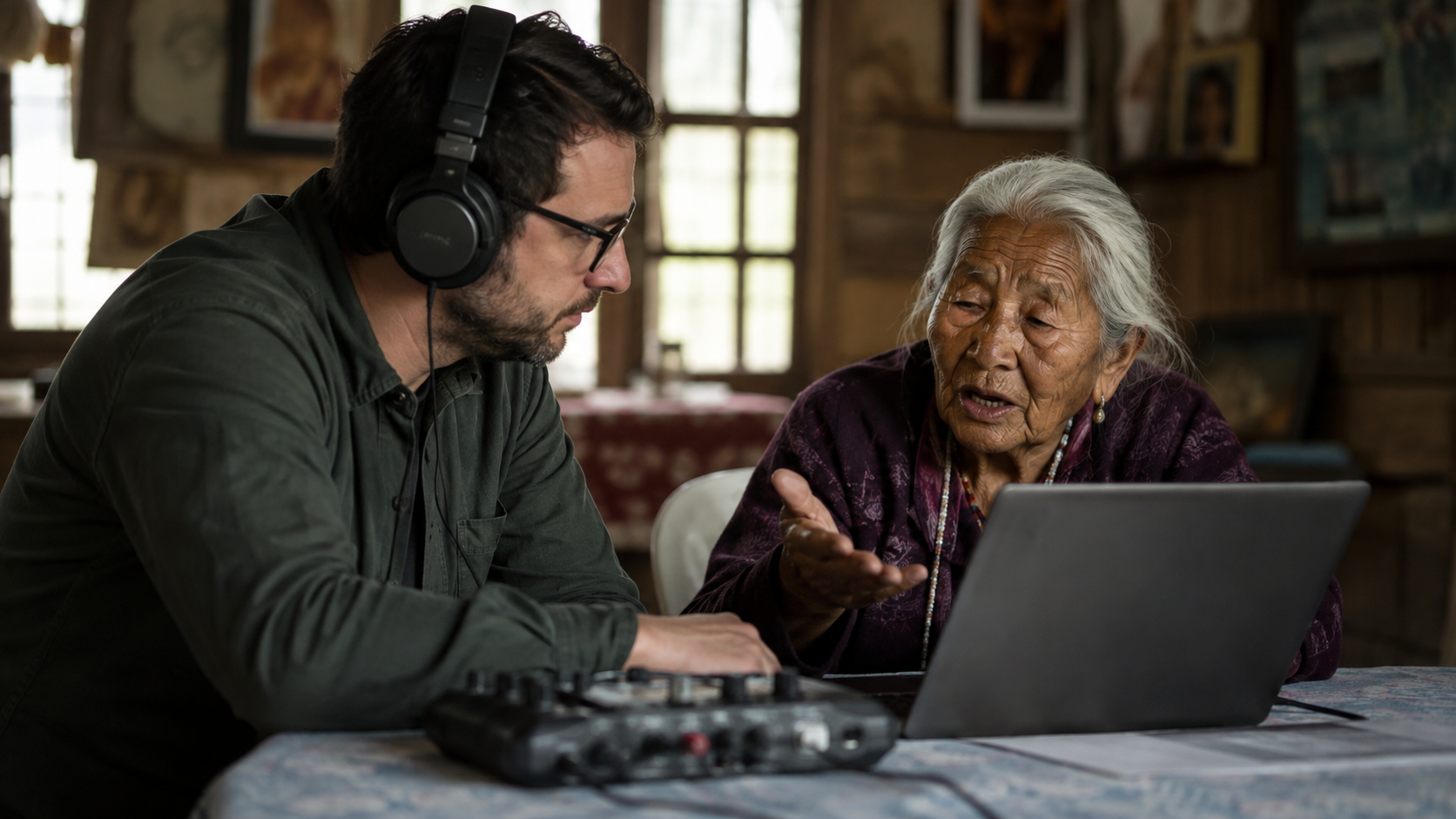
Across the world, thousands of languages are spoken by small communities, and many are no longer being learned by children. Digital archives have become an important part of the effort to preserve them. Researchers and local speakers are recording stories, songs, conversations, and vocabulary before irreplaceable knowledge disappears.
Older documentation often consisted of handwritten notes or fragile tapes stored in a university cabinet. Those collections were difficult for communities to find and almost impossible to use in a classroom. Modern projects scan historic records, convert audio into stable formats, and organize material with searchable descriptions, dates, and speaker permissions.
The best archives are built with speakers rather than simply about them. Community members decide which ceremonies may be shared publicly and which recordings should remain restricted. Young volunteers learn to operate microphones, interview elders, and write transcriptions. Linguists can provide technical support while local councils retain control over cultural decisions.
Once material is online, teachers can create pronunciation exercises, illustrated dictionaries, and short reading lessons. Families living far from their ancestral region can hear familiar voices and practice at home. Musicians and storytellers also use archived material to revive older expressions, while students discover that their language belongs in modern media as well as memory.
New tools are making collections more useful. Automatic speech recognition can suggest a rough transcript, though it still requires careful correction by fluent speakers. Mobile recording kits reduce costs, and cloud backups protect files from fire or deterioration. Some archives offer interactive maps that connect a word or story with the place where it was recorded.
Preservation is not as simple as uploading everything. Projects must obtain informed consent, protect personal information, and plan who will maintain files after a grant ends. Internet access may be limited in remote areas, so many teams also distribute offline copies on local servers or memory cards. Standard file formats help future software open today’s recordings.
A digital archive cannot keep a language alive by itself; people must continue speaking it in homes, schools, and public life. Yet an accessible collection gives revitalization work a strong foundation. It preserves voices for future learners and lets communities transform documentation into lessons, performances, publications, and renewed everyday use.
For institutions interested in language preservation, the most useful first step is a small, carefully evaluated pilot. Clear goals, feedback from speakers, and transparent results make it easier to improve the work before expanding it. That measured approach also helps communities direct limited time and funding toward methods that produce lasting public value.