
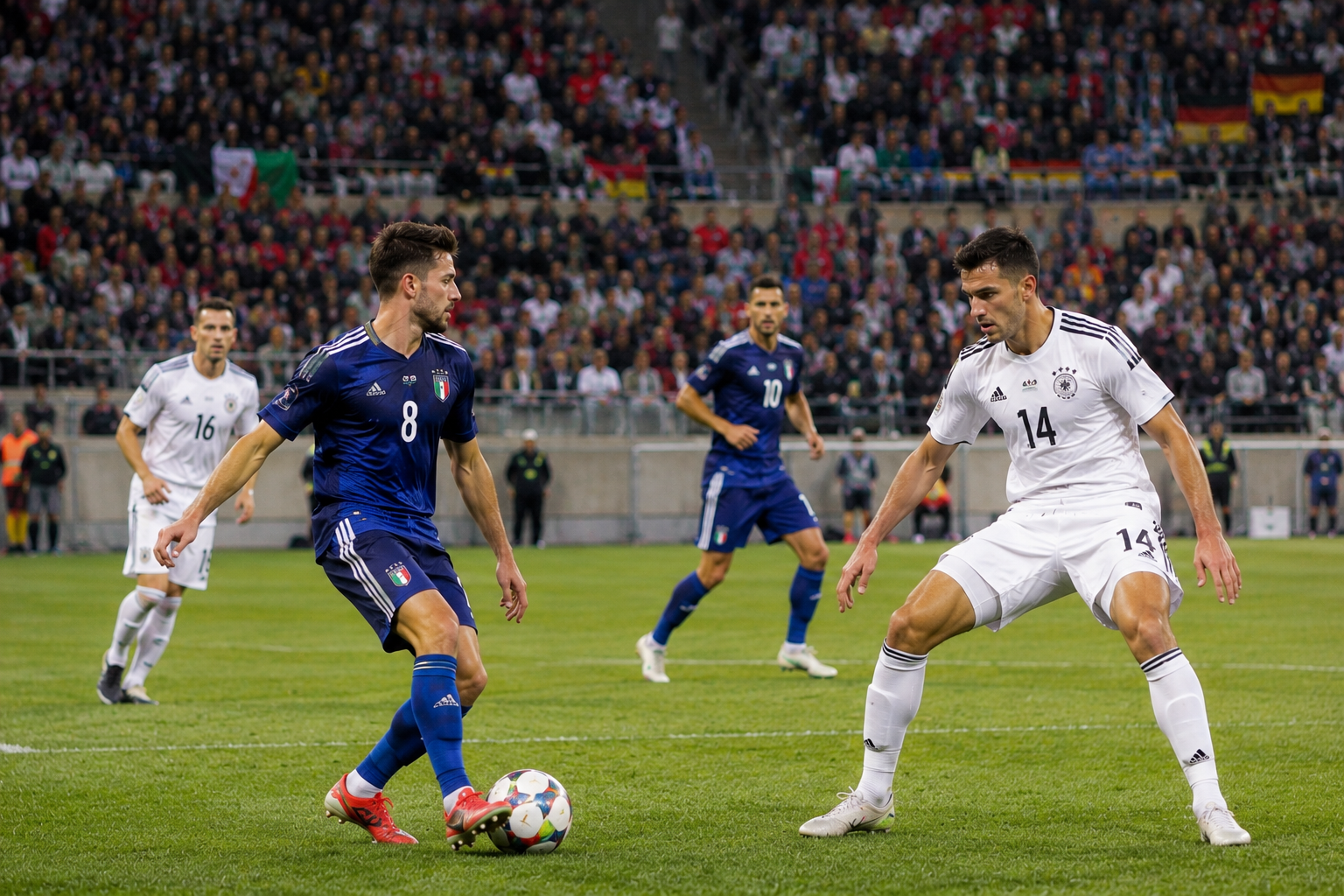
International football is often defined by the pressure of qualification campaigns and the excitement of major tournaments. Yet some of the most revealing moments in the development of national teams happen outside these high-stakes competitions. Friendly matches offer a different kind of football experience, where experimentation, discovery and the meeting of contrasting traditions can take centre stage. For supporters who want to revisit these encounters, international friendly match replays provide an opportunity to look beyond the final score and appreciate the details that make each international fixture distinctive.
Unlike tournament matches, friendlies are not primarily about progressing to the next round or collecting points. Their importance lies in what teams can learn, what coaches can test and how players respond to unfamiliar challenges. A match that appears relatively quiet on the surface may contain valuable clues about a team’s future direction.
A Different Kind of International Football
Friendly fixtures occupy a special position in the international calendar. National teams have limited opportunities to train together, particularly when their players are spread across different domestic leagues and competitions. A short international break must therefore serve several purposes at once: reconnecting the squad, reinforcing tactical principles and evaluating individual performances.
This creates an unusual atmosphere. Players may be meeting new teammates for the first time, returning to the national setup after an extended absence or adapting to a different role from the one they perform at club level. Coaches, meanwhile, have to make decisions with limited preparation time.
The result is football that can be less predictable than a conventional competitive fixture. A familiar formation may be adjusted, a young player may receive an unexpected opportunity, or a team may approach the match with a tactical idea that has not yet been used in an official competition.
These circumstances make friendly matches particularly interesting when viewed in their entirety. The opening stages, substitutions and final minutes can reveal how a team responds to changes rather than simply whether it wins.
The Freedom to Experiment
One of the defining characteristics of an international friendly is the opportunity to test ideas without the immediate consequences associated with a qualification match. This does not mean that the players lack motivation. Representing a national team remains a significant responsibility, and individual performances can influence future selection decisions.
However, coaches often have greater room to explore different approaches.
A manager might introduce a new midfield structure, ask full-backs to take more attacking responsibility or examine how the team performs with a different balance between possession and direct play. A formation that looks promising in training can be tested against a real opponent, where pressure, movement and decision-making expose its strengths and weaknesses.
The value of watching a complete match becomes especially clear here. A tactical experiment cannot always be judged by a single attacking move or a successful passage of possession. Its effectiveness may depend on what happens after the ball is lost, how quickly players recover their positions and whether the team maintains its structure throughout the game.
A replay allows supporters to observe these details and understand why a coach might consider a particular experiment successful even when the scoreboard tells a less impressive story.
New Faces and the Next Generation
International friendlies also provide an important introduction to emerging talent. For younger footballers, receiving a national-team call-up is a milestone, but earning meaningful minutes on the pitch presents a different challenge.
The transition from domestic football to the international stage can be demanding. The pace may be unfamiliar, opponents may possess different physical qualities, and the tactical expectations can change considerably. A promising player must demonstrate not only technical ability but also composure, awareness and the capacity to understand instructions quickly.
Friendly matches offer coaches an opportunity to observe these qualities in a senior international environment. They can assess how a newcomer communicates with experienced teammates, reacts to mistakes and handles difficult moments during a match.
For supporters, these appearances can become the beginning of a longer story. A player who receives a brief opportunity in one friendly may gradually become an important part of the national team. Looking back at earlier performances can reveal how their confidence, positioning and influence developed over time.
It is also worth paying attention to the experienced players who share the pitch with newcomers. Their movement, communication and leadership can help establish the standards expected within the squad.
When Different Football Cultures Meet
International friendlies create encounters that domestic competitions cannot always offer. National teams from different confederations may have distinct approaches to pressing, possession, defensive organisation and attacking transitions. When these traditions meet, the contrast can be fascinating.
Some teams prefer to build attacks patiently, using short passing combinations and carefully organised movement. Others are more comfortable with quick forward passes, direct running and rapid transitions. Certain sides rely on compact defensive structures, while others attempt to control the game by keeping the ball for long periods.
These differences are not simply tactical preferences. They often reflect wider football cultures, coaching traditions and the development pathways available to players in different regions.
A friendly between unfamiliar opponents can therefore become an educational experience for both teams. Players encounter new challenges, coaches gain insight into alternative approaches, and supporters discover styles of football they may not regularly see.
International initiatives that bring teams from different confederations together illustrate the broader value of these encounters. They create opportunities for football associations to establish new connections and give national sides experience beyond their usual competitive environment.
The Details That Disappear in Short Highlights
Highlights are useful for remembering goals, saves and dramatic incidents, but they rarely explain the full structure of a match. International friendlies are particularly vulnerable to this limitation because their most important developments may not produce spectacular footage.
Consider a team that spends the first half struggling to build attacks. A short highlight package might show only a missed chance or a defensive error. Watching the full match, however, may reveal that the coach changed the midfield positioning, allowing the side to progress more effectively after the interval.
The same applies to individual performances. A defender’s contribution may involve maintaining the line, covering space behind an advancing full-back or making several important decisions before an opponent receives the ball. These actions are unlikely to appear in a goals-only compilation.
Replays also make it easier to follow the rhythm of substitutions. A change in personnel can alter the balance of a team, introduce additional speed or provide greater control in midfield. Observing what happens immediately before and after a substitution helps explain the thinking behind a manager’s decision.
For anyone interested in the technical side of international football, these details often provide more insight than the headline result.
The Emotional Side of Representing a Nation
Although friendly matches offer room for experimentation, they still carry emotional significance. A national shirt represents more than an individual career opportunity. It connects players with supporters, communities and a shared sporting identity.
This is especially noticeable when a team plays at home. The atmosphere may differ from that of a major tournament, but the anticipation surrounding a national appearance remains powerful. Supporters want to see familiar figures, welcome new players and understand what the next generation might bring.
Away fixtures create another kind of experience. Teams must adapt to unfamiliar stadiums, travel conditions and crowds supporting the opposition. These encounters can help players develop the composure required for future competitive assignments.
For supporters watching a replay, the atmosphere is part of the story. Crowd reactions, celebrations, moments of frustration and the exchanges between players all contribute to the character of a fixture.
Even without a trophy at stake, an international friendly can create memories that remain meaningful long after the final whistle.
Understanding Progress Between Major Tournaments
The development of a national team rarely follows a straight line. A promising performance can be followed by a difficult result, while an apparently ordinary match may provide the foundation for a successful tactical adjustment.
Friendly fixtures help fill the spaces between major competitions. They allow teams to maintain continuity, assess their depth and respond to weaknesses identified in previous performances. They can also reveal how a squad is changing as experienced players move towards the end of their international careers and younger footballers begin to take on greater responsibility.
Looking at several matches across different international windows can make this evolution easier to understand. A team that once depended on individual moments may gradually develop a more organised attacking structure. A defence that previously struggled under pressure may become more comfortable playing out from the back.
These changes are not always immediately visible in the results. They emerge through repeated performances, adjustments and the gradual development of understanding between teammates.
Every Friendly Has Its Own Value
International friendlies may not determine who lifts a trophy, but they remain an essential part of the wider football calendar. They provide space for tactical exploration, introduce new generations of players and bring different football cultures into direct contact.
Their appeal becomes greater when supporters look beyond the scoreline. A complete match can reveal the ideas behind a formation, the contribution of an emerging player or the small adjustments that influence a team’s performance. It can also preserve the atmosphere of a particular international occasion, including moments that might otherwise disappear from the conversation.
The significance of a friendly is not always obvious when the referee blows the final whistle. Sometimes its real value becomes clear only later, when a young player establishes themselves, a tactical experiment appears in a major tournament or a team demonstrates how much it has developed.
That is why these matches deserve more than a passing glance. They are part of the ongoing story of international football, where progress is often built quietly, one encounter at a time.